Sales & RevOps:
B2B SaaS demand generation
A B2B SaaS team worked leads in the order they arrived, with no idea which sources converted. Four months after Lead Manager's scoring agent went live, ranking every lead and explaining why, reps were booking 2.4× more meetings per hour.
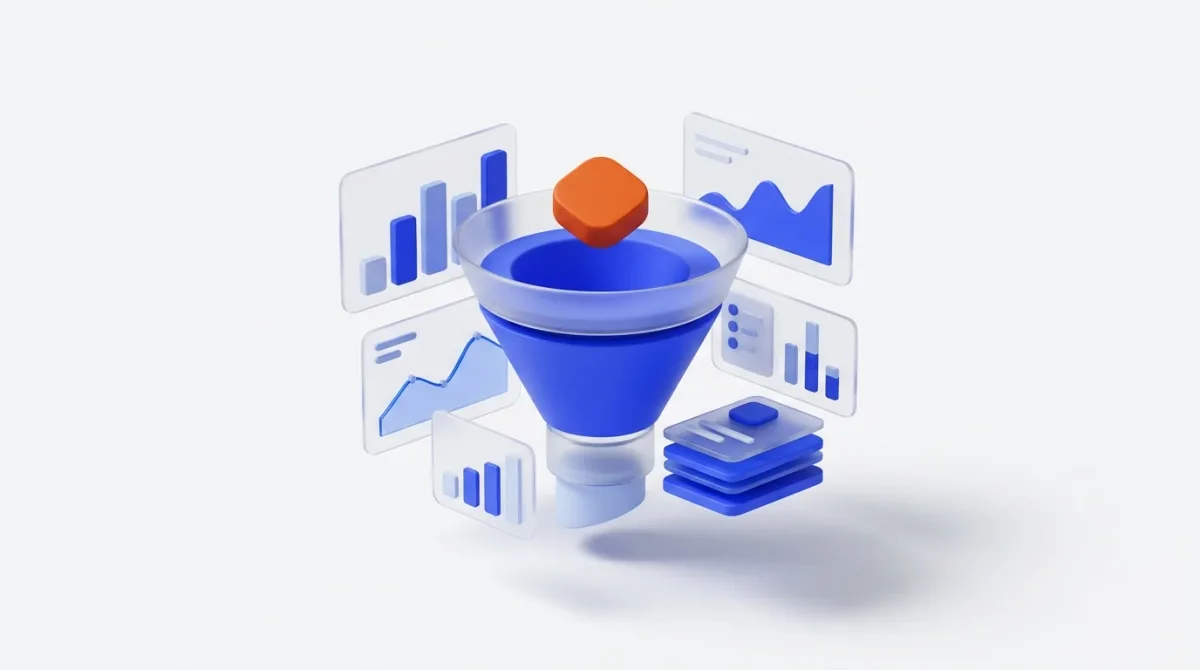
- Client
- A B2B SaaS company
- Sector
- B2B SaaS demand generation
- Duration
- Approximately four months end-to-end
The premise
Most sales teams spend more time sorting prospects than selling to them. Leads arrive from forms, events, and integrations with no dedup and no ranking, so reps work them in the order they land, which means the lead most likely to close waits behind three that never will. And because no one can see which source actually converts, the team keeps spending on the channels that look busy rather than the ones that close.
Lead Manager runs a scoring agent that captures every source, deduplicates it, ranks each lead, and tells the rep why. This case covers the rollout to a B2B SaaS team.
How this engagement ran
From the problem to a system the team now runs themselves.
Leads worked by arrival order, sources unattributed
Inbound arrived across forms, APIs, and webhooks with duplicates and no ranking. Reps worked the queue top to bottom, so high-intent leads sat behind low-intent ones, and follow-up was driven by who shouted loudest rather than who was likely to buy.
The team had no source attribution, so it could not tell which channels produced revenue and which just produced volume, and kept funding both.
A scoring agent that dedups the intake, ranks every lead, and explains the score
Lead Manager's scoring agent captured every source into one deduplicated pipeline and scored each lead with a per-factor explanation, so reps could see not just the rank but the reason. Real-time dashboards exposed which sources actually converted.
Phase 1: Intake and dedup
Three weeks. Connected the team's forms, APIs, and webhooks into Lead Manager's multi-source capture with automatic deduplication, so one prospect was one record.
Phase 2: Predictive scoring
Five weeks. Scoring deployed with per-factor explanations: each lead ranked, and each rank accompanied by the reasons behind it, so reps trusted the order.
Phase 3: Source attribution dashboards
Four weeks. Real-time dashboards surfaced conversion by source, so the team could shift spend toward the channels that closed.
2.4× more meetings per hour
Reps booked 2.4× more meetings per hour, because they worked the highest-intent leads first and stopped spending time on duplicates and dead ends. The per-factor explanations meant reps trusted the ranking instead of second-guessing it.
With source attribution visible, the team redirected spend toward the channels that actually converted.
2.4×
more meetings booked per hour
Explained
per-factor reason behind every score
99.98%
platform uptime
Illustrative scenario. The figures model the engineering shape of real SDEN work, not a specific client's measured results.
Before and after
What changed.
Continue
More from SDEN: sales & revops






Want results like this?
Tell us your situation. We'll come back with a concrete first read within 24 working hours, no commitment.